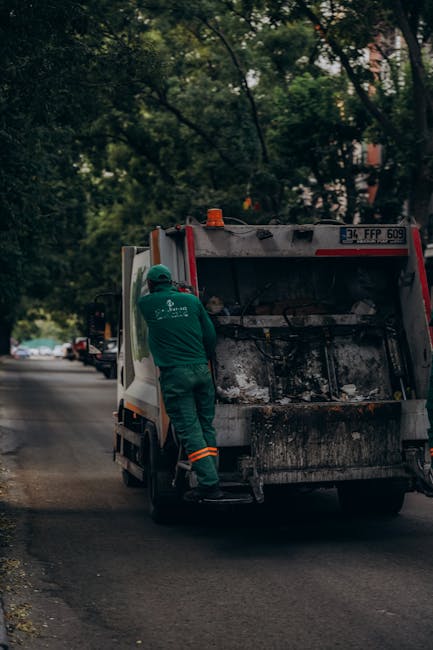
Avoid hidden charges in Brockley rubbish removal quotes

If you have ever compared rubbish removal prices and thought, "that looks fine... but what am I missing?", you are not alone. A quote can seem straightforward at first, then suddenly pick up extras for lifting, loading, access, parking, or waste type. This guide on how to avoid hidden charges in Brockley rubbish removal quotes will help you spot the warning signs early, ask the right questions, and choose a service with confidence rather than crossed fingers.
In Brockley, where homes can range from tight-staircase flats to larger family houses and awkward garden access, pricing needs to be clear from the start. The good news? Most surprises are avoidable if you know what to look for. Let's make that easier.
- Why it matters
- How rubbish removal quotes work
- Key benefits of checking quotes properly
- Who this is for
- Step-by-step guidance
- Expert tips
- Common mistakes to avoid
- Tools, resources and recommendations
- Law, compliance and best practice
- Options and comparison table
- Case study
- Practical checklist
- Conclusion
- Frequently asked questions
Why Avoid hidden charges in Brockley rubbish removal quotes Matters
Hidden charges are frustrating because they turn a useful service into a guessing game. A quote should help you plan, compare and budget. If it is vague, the final bill can creep up and the original price loses its value. That matters whether you are clearing a few bulky items, a packed loft, or post-renovation debris after a weekend of noisy drilling and dust.
For local customers, the impact is not just financial. A poor quote can also create stress on the day. You might be told that the waste is "heavier than expected", that access is difficult, or that a separate fee applies for certain items. Sometimes those charges are fair if they were clearly explained. The problem is when they appear late, after you have already committed.
To be fair, rubbish removal is not always simple to price from a photo. A few extra steps in a narrow Brockley terrace or a third-floor flat can genuinely change the work involved. That is exactly why clarity matters. A trustworthy company should explain the assumptions behind the quote, not hide them behind fine print.
Key takeaway: a good quote is not just about the cheapest number. It is about knowing what is included, what could change, and what you will actually pay when the job is done.
How Avoid hidden charges in Brockley rubbish removal quotes Works
The process starts with information. A company usually bases its quote on the type of waste, estimated volume, access to the property, labour required, and disposal costs. If any of those details are unclear, the quote may be only a rough estimate. That is not automatically bad, but it should be labelled as such.
In practice, a transparent quote should tell you:
- what waste is being removed
- how the amount is measured, often by load size or time on site
- whether labour, loading and lifting are included
- if there are extra fees for stairs, long carries, parking or restricted access
- whether disposal, recycling and VAT are included
Some quotes are "all-in" and some are not. An all-in quote can still have conditions, but the conditions should be visible before you book. A less transparent quote may list a low base price, then stack on extras later. That is where people get caught out. One customer sees a tempting figure, another sees the final invoice, and suddenly the story changes. Not ideal.
If you are comparing providers, it helps to think less about the headline price and more about the pricing method. A quote that is slightly higher but fully explained is often better value than a bargain that only looks cheap at first glance.
For a broader overview of service expectations and pricing structure, you can also review the site's pricing and quotes guidance and the main waste removal service information.
Key Benefits and Practical Advantages
Checking for hidden charges is not just about avoiding a bad experience. It gives you real control over the job.
- Better budgeting: You know the likely total before anyone arrives.
- Cleaner comparisons: You can compare quotes on equal terms rather than guessing what is missing.
- Less stress on the day: There is less room for last-minute disagreement at the kerb, the stairwell, or the front gate.
- Fewer delays: Clear pricing often means clearer job scope, which helps the team work faster.
- Improved trust: Transparent pricing is usually a sign that the company runs a tidy, professional operation.
There is also a practical side people sometimes overlook. If you are clearing a house after a move, dealing with bulky furniture, or emptying a garage that has become a bit of a time capsule, the mental load is already enough. A clear quote removes one more source of friction. That matters more than people think.
And if you are arranging removal for a business, you usually need predictable costs for accounts, project budgets and timing. That is why many organisations prefer to review the company's business waste removal approach before booking anything.
Who This Is For and When It Makes Sense
This topic matters to pretty much anyone booking waste collection, but some people benefit more than others.
- Homeowners: especially if you are decluttering, moving, or dealing with a one-off clear-out.
- Landlords and letting agents: where costs need to be controlled and documented.
- Tenants in flats: because access, stairs, lifts and shared entrances can affect the final price.
- Tradespeople and renovators: where building debris may need a more specific quote.
- Offices and small businesses: where service clarity matters and time on site may be tightly scheduled.
If you are arranging a loft clearance, for example, the quote may depend on whether items are already bagged, how far they need to be carried, and whether the loft ladder is usable. A garden clearance can be similar: a neat pile at the front is one thing, brambles, damp soil and broken sleepers at the back of a long garden are another. Same general service, very different effort.
So when does it make sense to dig deeper into the quote? Always, honestly. But especially when the job is not straightforward, the property has awkward access, or the waste includes mixed materials. A little checking now can save a lot of back-and-forth later.
If the property type is unusual, these service pages may help you think through the practical side: flat clearance, loft clearance, garage clearance, and garden clearance.
Step-by-Step Guidance
Here is a practical way to check Brockley rubbish removal quotes without getting overwhelmed.
- Describe the job properly. List the waste type, estimated volume, floor level, access conditions and any items that might need special handling.
- Ask what is included. Labour, loading, transport, disposal, recycling, VAT, and any waiting time should be clear.
- Check the pricing basis. Is it by load size, by item, by weight, or by estimated time? If you do not know, ask. Plainly.
- Ask about extras before you book. Common extras include stairs, long carries, parking issues, mattress disposal, heavy items or delayed access.
- Request a written quote or clear message. Even a concise written summary is better than vague verbal pricing. You need something to refer back to.
- Compare like with like. Do not compare one all-in quote against another that only shows a starting price.
- Confirm the final check on arrival. If the job changes, ask how and why the price changes before work starts.
Here is a small but useful habit: keep your description consistent. If you tell one company "a few bags" and another company "about half a van", you are not really comparing prices. You are comparing two different jobs. Easy mistake, very common.
A decent provider should be happy to explain things. If the person on the phone seems evasive or rushed, that is a signal in itself.
Expert Tips for Better Results
These are the simple checks that tend to save the most hassle.
- Take clear photos in daylight. A quick shot at 8 a.m. near a dark hallway is not ideal. Open the curtains, step back, and show the whole pile.
- Show access points. Stairs, gates, tight corners and shared hallways can all affect loading time.
- Separate unusual items. Fridges, paint tins, builders' rubble and sofas may each need different handling.
- Ask if the quote assumes easy parking. In parts of Brockley, parking can be the hidden complication nobody mentioned.
- Check whether recycling is included. This is not a price trick as such, but it tells you something about how the company handles waste.
- Be realistic about volume. People often underestimate how quickly a room fills a van. Happens all the time.
One good trick is to ask, "What would make this quote go up?" That question is simple, but it exposes most of the hidden-fee territory in one go. You may feel slightly overcautious saying it. Fine. Better cautious than surprised.
For readers who care about where their waste ends up, the site's recycling and sustainability information is worth reviewing alongside your price checks.
Common Mistakes to Avoid
Most quote problems come from the same few mistakes. Nothing dramatic. Just easy oversights.
- Choosing on price alone: the cheapest number can hide the most conditions.
- Assuming "all included" really means all included: always ask what the phrase covers.
- Not mentioning awkward access: long carries and stairs should never be a surprise on arrival.
- Forgetting item type: builders' waste, furniture and mixed junk are not identical jobs.
- Skipping the written confirmation: memory is a lovely thing, but it is not a contract.
- Not asking about VAT: a quote can look one way and invoice another if tax is not stated clearly.
Another one: people sometimes assume that if a company sounds friendly, the quote will automatically be clear. Usually, yes, but not always. Friendliness and transparency should travel together, yet they do not always arrive in the same van.
If something feels vague, pause. Ask again. A professional service will not mind the clarification.
Tools, Resources and Recommendations
You do not need special software to avoid hidden charges, just a sensible system. A few simple tools can make the process much smoother.
- Phone camera: take photos of the waste from a few angles.
- Notes app: record the date, what was quoted, and what was included.
- Measurement estimate: use room size, bin bag count, or furniture count to describe the load more accurately.
- Checklist: write down the questions you want answered before you book.
Recommended approach: create a one-paragraph summary before requesting any quote. Something like, "Two sofas, four chairs, a broken wardrobe, access via first-floor stairs, parking available on street if space is free." That is the sort of detail that helps a company quote properly and reduces the chance of awkward add-ons later.
If you are clearing a property type with more moving parts, relevant service pages can help you think through scope and access, including house clearance, home clearance, and office clearance.
You may also want to review payment and security details if you are concerned about how and when payment is taken. That is a small thing, but it helps.
Law, Compliance, Standards, or Best Practice
Hidden charges are not just a customer service issue. They touch on basic consumer fairness and commercial best practice. In the UK, customers should be given clear pricing information and honest descriptions of what a service includes. The exact legal position can vary depending on the contract, the wording of the quote and the circumstances, so it is wise to read any terms carefully.
From a practical perspective, good waste removal practice usually includes:
- clear pre-booking information
- transparent conditions for extra labour or access issues
- responsible handling and disposal of waste
- appropriate insurance and safety procedures
- fair complaint handling if something goes wrong
If you are dealing with larger, riskier or more complex items, it is sensible to check that the provider has proper procedures for safety and handling. The pages on health and safety policy and insurance and safety may give you a better feel for how a company approaches that side of the work.
And if pricing ever feels unclear or inconsistent, a formal route for raising concerns matters. A clear complaints procedure is a good sign because it shows the company expects to handle issues properly rather than shrug and move on.
One more practical point: if you are comparing services for commercial use, ask whether the quote aligns with your invoicing needs. That is the sort of detail that saves awkward conversations with finance later. Nobody enjoys those. Nobody.
Options, Methods, or Comparison Table
Different quoting methods suit different jobs. Here is a simple comparison to help you judge what you are being offered.
| Pricing method | What it means | Pros | Watch out for |
|---|---|---|---|
| All-in quote | One price for the agreed job | Easier budgeting, fewer surprises | Make sure the quote still states exclusions clearly |
| Estimate | Approximate price based on limited details | Useful for rough planning | Final cost may change if the job differs from the description |
| Load-based pricing | Charge depends on how much space the waste takes | Often practical for mixed loads | Ask how volume is measured and whether labour is included |
| Item-based pricing | Each item or category has a set charge | Good for a small number of bulky items | Extra fees may apply for access or disposal complexity |
| Time-based pricing | Price depends on labour time on site | Works for unpredictable clearances | Can become expensive if access is poor or the job expands |
If you want simplicity, all-in pricing is often easiest. If your job is unusual, a carefully explained estimate may be more realistic. The key is not the format itself. It is the clarity behind it.
Case Study or Real-World Example
Picture a Brockley flat clearance after a move. The customer has a double bed, a wardrobe, several bags of mixed household items, and a couple of old kitchen chairs. On paper, that sounds straightforward. But the flat is on the second floor, there is no lift, and parking is tight on the street at that hour.
A vague quote might say, "GBPX for removal." Nice and simple, until the team arrives and says stairs and parking are extra. The customer feels blindsided. Not because the service is impossible to price properly, but because the assumptions were never spelled out.
A better quote would have asked a few extra questions upfront:
- What floor is the flat on?
- Is there a lift?
- How many items are heavy or awkward?
- Can the vehicle park close by?
- Are there any items requiring separate handling?
With that information, the quote may be slightly higher than the first headline number, but it is much more reliable. And that reliability is the point. Truth be told, most people would happily pay a fair price if they knew the price was fair from the outset.
This is especially true when furniture is involved. If you need a clearer idea of how bulky items are treated, the pages on furniture clearance and furniture disposal can help frame the job more accurately.
Practical Checklist
Use this checklist before you accept any rubbish removal quote in Brockley.
- Have I described the waste clearly?
- Have I mentioned stairs, lift access, narrow hallways or long carries?
- Do I know whether the quote includes labour and loading?
- Have I asked about VAT and disposal fees?
- Do I know whether the quote is fixed or estimated?
- Have I checked for extra charges on bulky, heavy or special items?
- Have I asked what would cause the price to change?
- Have I got the key details in writing?
- Have I compared the quote with another on the same basis?
- Do I feel comfortable with the explanation, not just the price?
If the answer to any of those is no, pause and ask again. Seriously, it is worth the extra minute.
For company information and service background, it can also help to read the about us page and the site's terms and conditions before you confirm anything.
Conclusion
Avoid hidden charges in Brockley rubbish removal quotes by focusing on clarity, not just cost. Ask what is included, confirm how the price is calculated, and make sure access, labour, disposal and possible extras are all explained before the job begins. That simple habit can save money, reduce stress, and make the whole process feel much more straightforward.
When a quote is honest, detailed and easy to understand, you can book with confidence instead of wondering what might appear later. That is the real win here.
Get a free quote today and see how much you can save.
If you are ready to take the next step, choose the option that best matches your job, ask the awkward questions early, and keep the paperwork tidy. A clear quote is a calmer day. And sometimes, that's worth a lot.
Frequently Asked Questions
What counts as a hidden charge in a rubbish removal quote?
A hidden charge is any fee that was not clearly explained before you agreed to the job. That might include labour, stairs, parking issues, VAT, heavy-item handling or disposal surcharges.
Should a rubbish removal quote in Brockley be fixed or estimated?
Either can be fine, but you should know which one you are getting. A fixed quote gives more certainty, while an estimate should explain what might change the final price.
How do I compare two rubbish removal quotes properly?
Compare them on the same basis. Check whether both include labour, disposal, VAT, access conditions and any special-item fees. A lower number is not useful if it excludes half the job.
Why do some quotes change after the team arrives?
Usually because the actual job differs from the description. The waste may be heavier, the access may be tighter, or there may be more volume than first estimated. That is why clear photos and good notes matter.
Can I reduce the chance of extra fees by preparing the waste myself?
Yes. If it is safe to do so, grouping items together, bagging loose waste, and making access easier can help. Just do not move anything heavy or hazardous without checking first.
Do stairs always cost extra?
Not always, but they often affect pricing because they increase labour time and effort. The important thing is that the company tells you in advance if stairs change the quote.
What should I ask before booking rubbish removal?
Ask what is included, how the quote is calculated, what could increase the price, whether VAT is included, and whether there are any special charges for bulky items or awkward access.
Is the cheapest quote usually the best choice?
Not necessarily. A very cheap quote may leave out key costs. The best quote is usually the one that is clear, fair and complete, even if it is not the lowest headline figure.
How can I tell if a company is being transparent?
Transparent companies answer questions directly, explain assumptions, and are happy to put the main points in writing. If you feel rushed or you keep getting vague answers, that is worth noticing.
Does the type of waste affect hidden charges?
Yes. Furniture, garden waste, builders' rubble, mixed household items and specialist items can all have different handling or disposal requirements. That is why the waste type should always be stated clearly.
What if I am booking a clearance for a flat or loft?
Then access details matter even more. Floor level, stairs, lift availability, narrow doors and carry distance can all affect the quote. Good providers will ask about these things upfront.
Where can I find more information before I book?
You can review the company's service pages such as pricing and quotes, recycling and sustainability, and contact details to make the next step easier.